
To view the technical documents, please fill out the form below. We will get back to you as soon as possible and you can log in and review with the password given by us. If you have a password, you can log in and continue by clicking "Sign In".
You can access the documentation by logging in from this area with the password given to you.
Clean and Safe Facilities — Right From Grain Intake
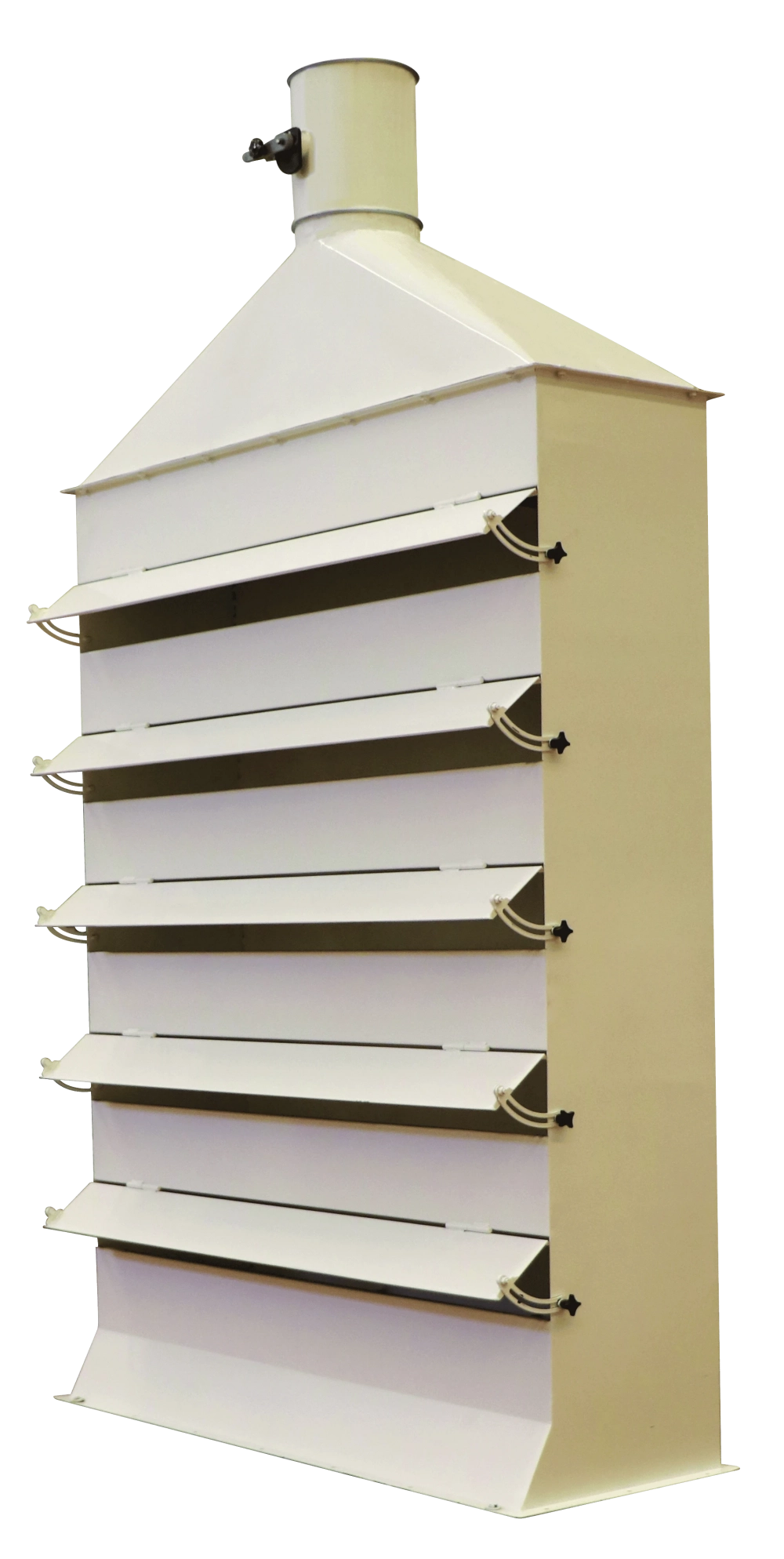
During the discharge of wheat, maize and similar grains from vehicles into the intake pit (tremi), a dense dust cloud is generated. The Intake Pit Dust Collection System is purpose-built to block and capture this dust directly at the source — before it can spread into the surrounding environment. The engineering principle is the creation of a uniform negative static pressure across the entire zone surrounding the dust source.
WORKING PRINCIPLE
Unlike conventional high-velocity suction systems, the dust rising during discharge is drawn through specially designed intake hoods at an optimised low velocity. The dust-laden air is conveyed by ducting straight into the filter unit, leaving the intake area cleaned of dust to practically 100%.
KEY ADVANTAGES
• Environment & occupational safety: Prevents dense dust from spreading into the atmosphere and across the plant, improving operator comfort and ensuring full compliance with environmental regulations.
• Minimised dust-explosion risk: Grain dust is highly flammable and explosive (ATEX risk groups). The system lowers static build-up and dust concentration, maximising facility safety.
• Minimum product loss: With the optimised air velocity, only the harmful airborne dust is drawn off; carry-over of the valuable product (grain kernels) into the filter is prevented.
• Modular hood design: Hoods are custom-sized to any discharge area (truck, lorry or wagon) and to the dimensions of the intake pit.
ENGINEERING NOTE
Laminar suction technology: the air velocity at the pick-up surfaces is calibrated to the terminal settling velocity of fine grain dust, so only suspended dust is captured. Negative-static-pressure management forms a continuous vacuum barrier around the intake zone, delivering near-zero emissions even at the peak of discharge.
 TR
 RU
 ES