To view the technical documents, please fill out the form below. We will get back to you as soon as possible and you can log in and review with the password given by us. If you have a password, you can log in and continue by clicking "Sign In".
You can access the documentation by logging in from this area with the password given to you.
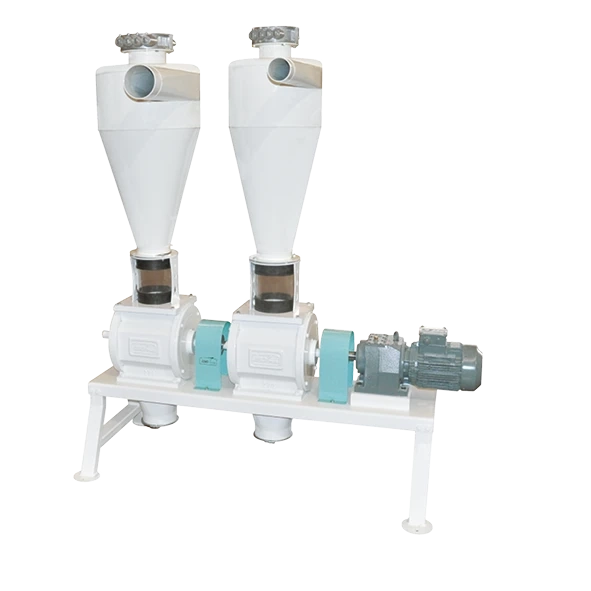
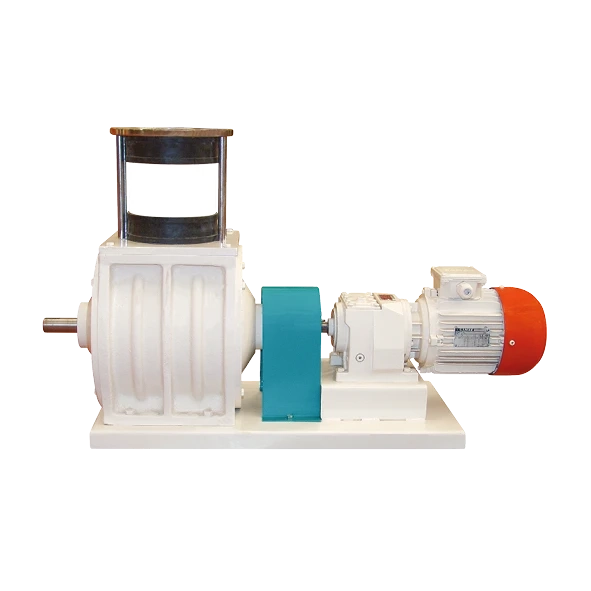
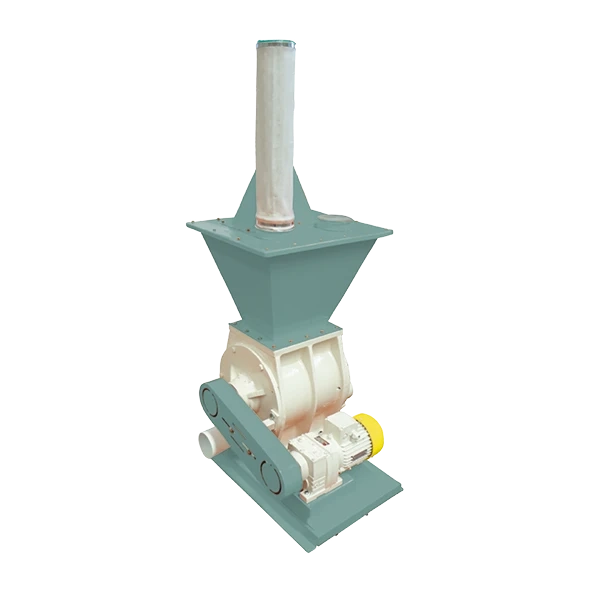
Pneumatic isolation unit with metallurgical stress-relief technology and wear resistance
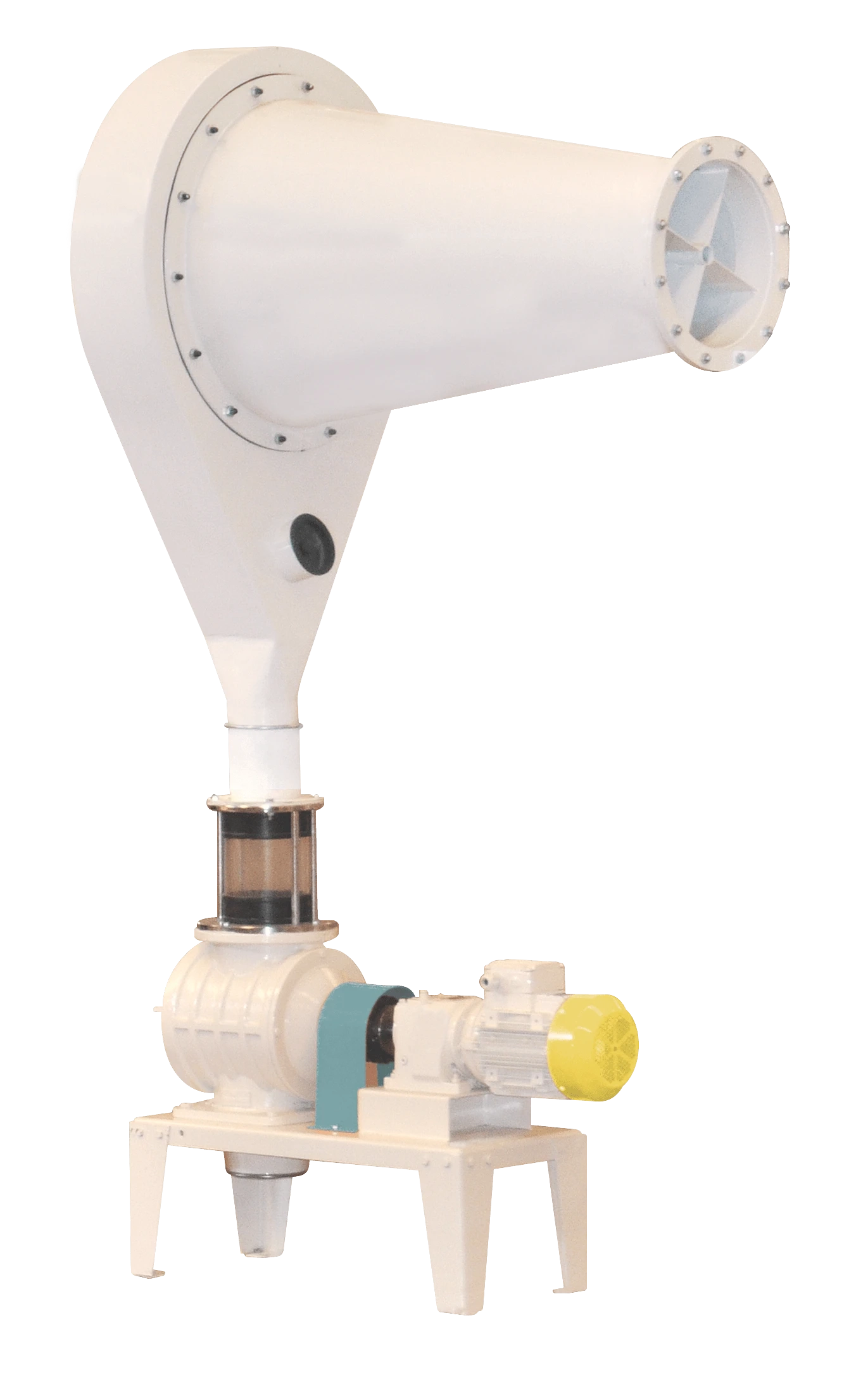
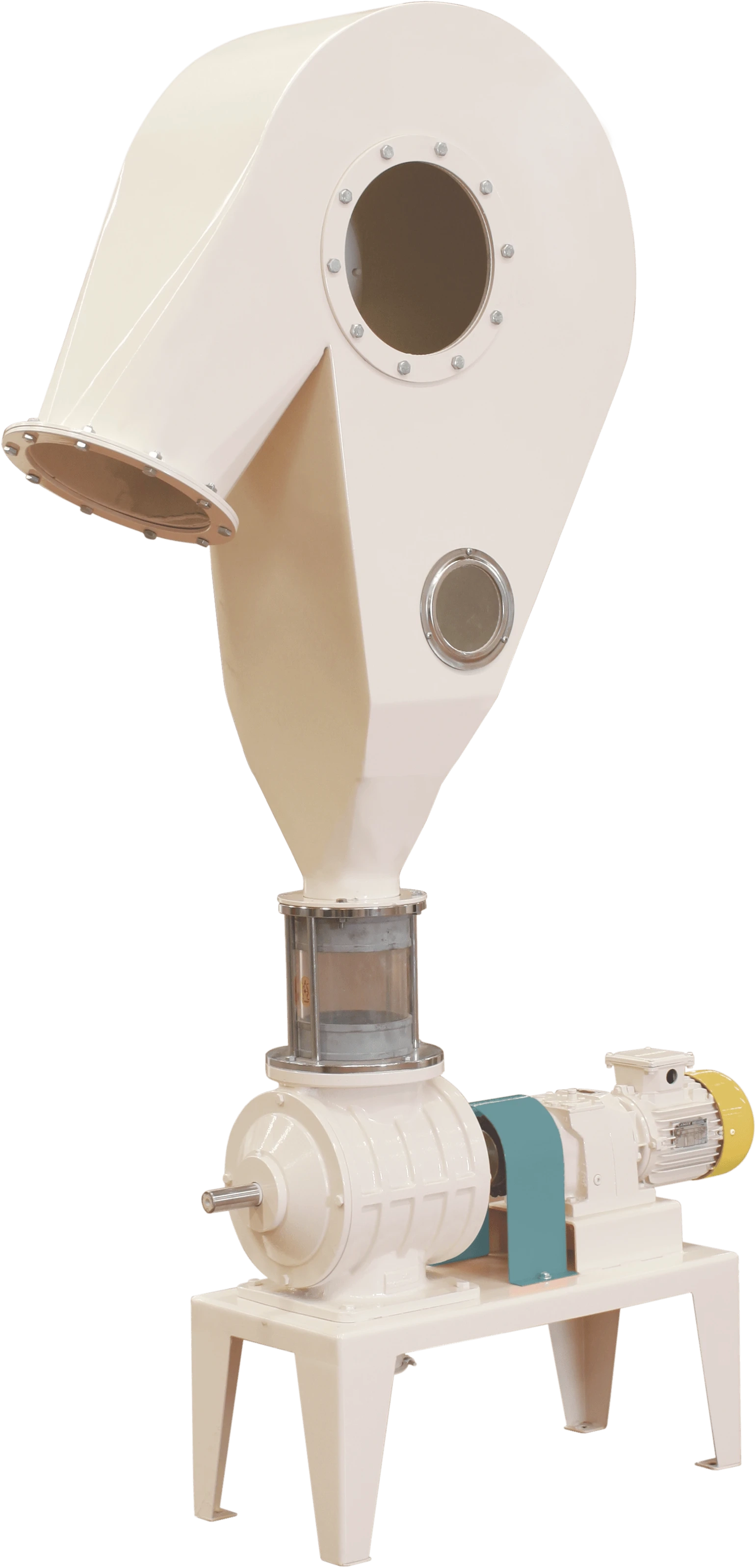
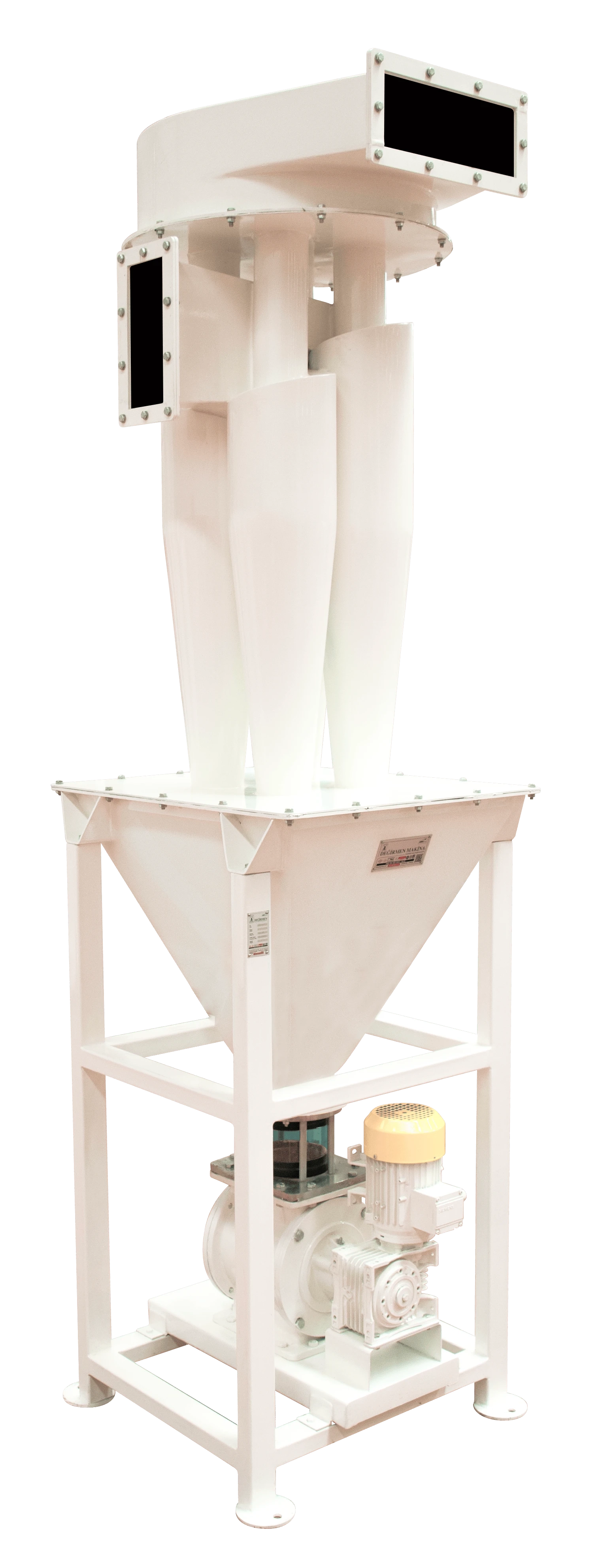
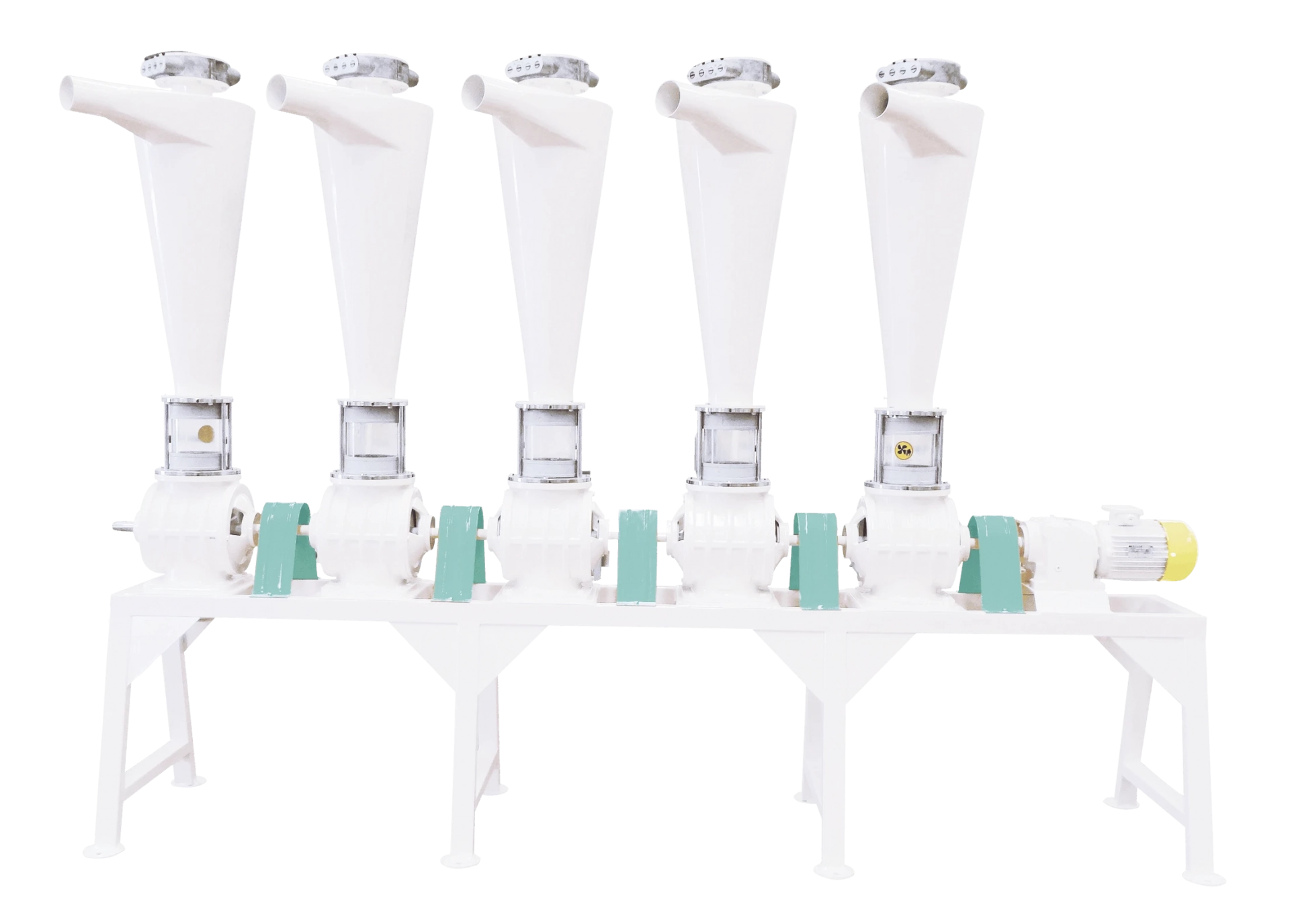
A high-precision pressure barrier that, on pneumatic conveying, filtration and silo-discharge lines, separates from the air the bulk raw materials (flour, semolina, bran, grain, etc.) conveyed by a pressure or vacuum stream and transfers them to the next process. Keeping the static and dynamic air losses across the system to a minimum, it ensures stable pneumatic-line operation with maximum energy saving.
WORKING PRINCIPLE
Sub-pneumatic-line and sub-cyclone integration — reception under pressure: mounted beneath the lower outlets of a cyclone, bag filter or silo, the airlock receives the dense raw-material mass from the upper hopper through a sealed inlet. Precise-tolerance rotor pockets — isolated circular conveying: the inner rotor turned by the drive motor fills its geometric pockets with product and carries it down in a circular motion; the micron-level precise tolerances between the body and the rotor vanes reliably prevent air blow-by in the reverse direction. Air-isolated flow discharge — loss-free mechanical discharge: the product in the rotor pockets is shed by gravity at the lower outlet point onto the next conveyor or pipeline, while the airlock continues to hold the pressure difference (vacuum or pressure regime) between the top and bottom of the line without disrupting it.
KEY ADVANTAGES
• Different alloy-metal combination (maximum life). The machine’s inner rotor and main body are
cast from special alloy metals of different hardness and structure, taking into account the friction
coefficients of the operating conditions; this metallurgical synergy maximises wear resistance
against metal-on-metal or product and radically extends component life.
• Thermal-ageing and stress-relief technology. After casting, refined artificial-ageing and mechanical-stress-relief techniques are applied to the body and rotor; through this crystallisation stabilisation, the slightest warping, creep and shape changes that could arise in the metal over years of heavy-duty operation are fully prevented.
• Minimum air loss with high energy saving. With the stress-relief process and precise CNC machining, the radial clearances between the rotor vanes and the body’s inner wall stay constant for life; keeping air leaks to a minimum reduces the load on the pneumatic fans and yields high electricity savings.
• Wide model and capacity variations. It is made in various industrial models and capacity options to suit the mounting-position design, the pipelines’ pressure/vacuum values and the hourly target output of the product processed.
ENGINEERING NOTE
The airlock (rotary valve) is a critical sealing element directly determining pneumatic-conveying performance in a flour mill. Cast metals tend over time, under dynamic loads and temperature changes, to release internal stresses and change shape (“creep”). The metallurgical ageing process we apply eliminates these molecular movements at the manufacturing stage and preserves the rotor-body tolerances; this prevents the blow-by (air leakage) effect and averts line blockages.
 TR
 RU
 ES