To view the technical documents, please fill out the form below. We will get back to you as soon as possible and you can log in and review with the password given by us. If you have a password, you can log in and continue by clicking "Sign In".
You can access the documentation by logging in from this area with the password given to you.
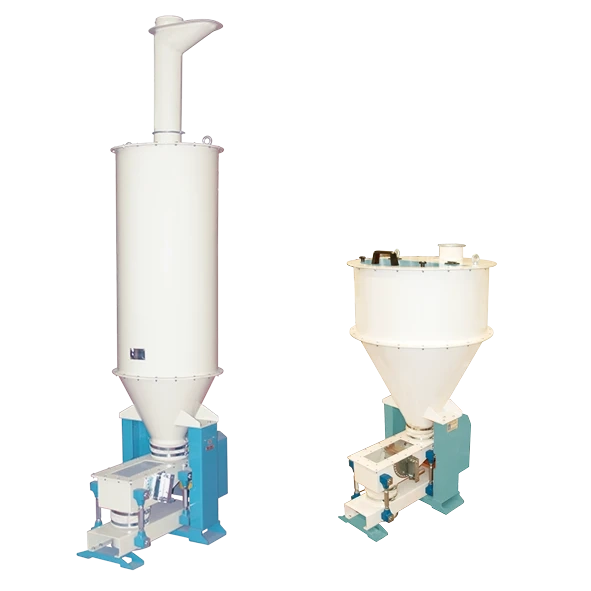
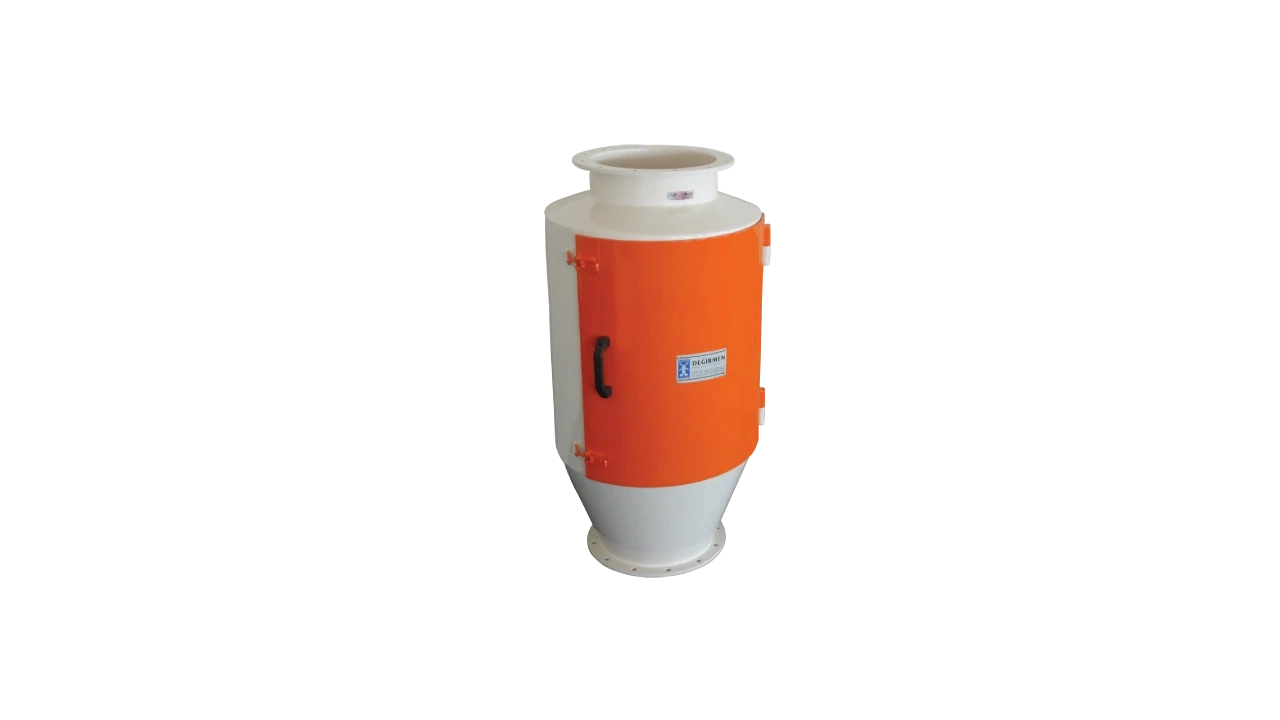
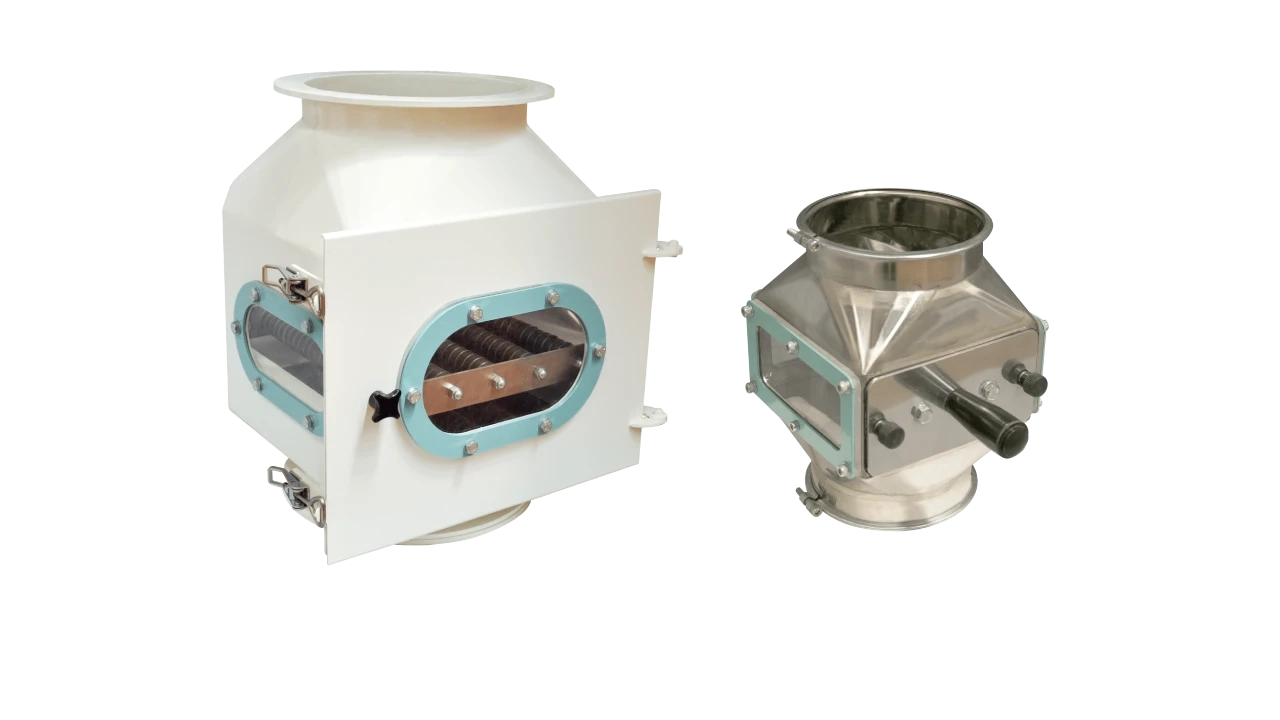
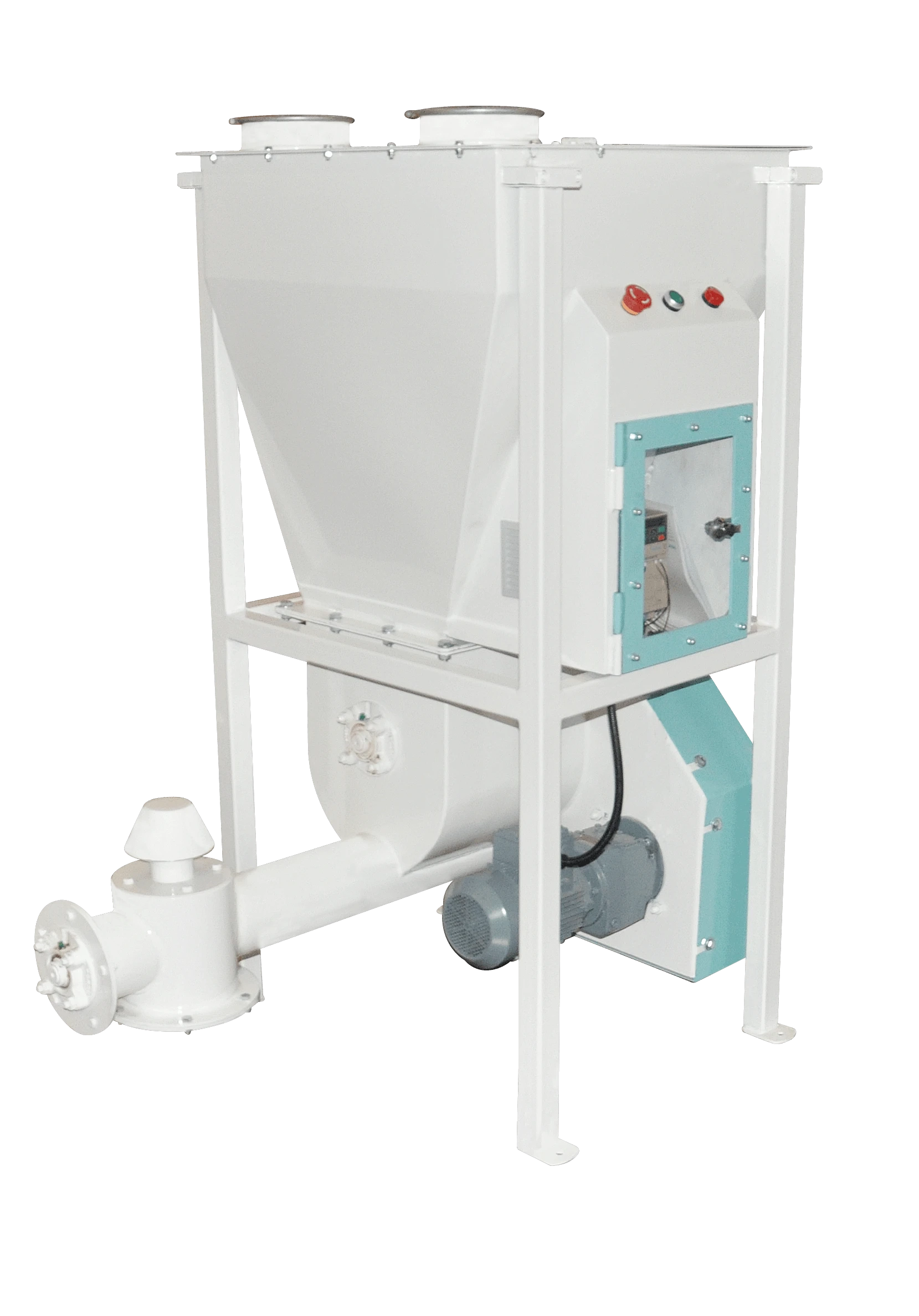
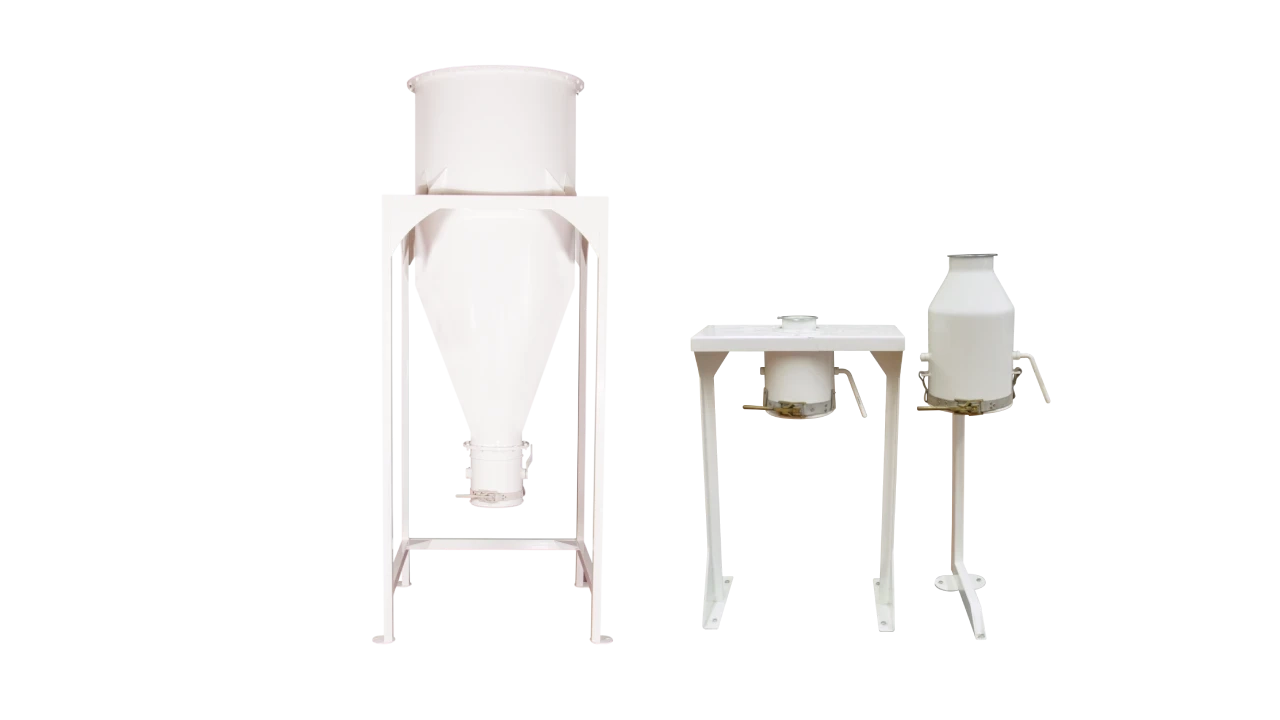
Vibratory dosing and raw-material recovery station
A high-precision vibratory-feeding unit for the controlled, stable and uniform return to the system of the over-sieve/through-sieve dust, micronised granules or sensitive additives arising during the process in flour, semolina and feed mills and the chemical industry. Integrated into continuous flow lines, this smart mechanism fluidises difficult dust materials flowing by gravity with kinetic waves, eliminating clogging and bridging risks.
WORKING PRINCIPLE
Accumulation hopper and static-mass reception — controlled hopper filling: the filter dust or micro-chemical granular materials collected by the system are delivered to the special-volume hopper positioned above the vibro feeder; the feed hopper safely stores the raw material until it reaches a certain fill level set by engineering criteria. Vibro-motor-driven frequency management — kinetic activation and shaking: once the hopper fill threshold is complete, the industrial vibro-motor integrated into the unit is driven automatically or manually; the high-frequency circular vibration waves the motor produces kinetically fluidise the static dust mass in the feeder body. Adjustable-flow uninterrupted system recovery — stable fine-product feeding: the vibration amplitude and the flow cross-sections of the product passing through the feeder’s inner mechanism are precisely calibrated; the pack-prone filter dust is, by these adjusted linear waves, included continuously in the main process line at the targeted stable flow.
KEY ADVANTAGES
- Maximum filter-waste recovery efficiency: It ensures the loss-free, orderly return to the system of the fine filter dust that has sifted from the jet-pulse bag filters of flour and semolina mills but flows with difficulty due to its static structure, minimising production waste.
- Micronised-dust and chemical-granule precision: It allows the precise dosing not only of food dusts but also of the micronised dust-form chemical additives and granular materials encountered in the chemical industry that must be added to the main mixture in set proportions.
- Bidirectional flow and ratio regulation: The mechanism has two-stage adjustment flexibility: the vibration intensity can be set via the vibro-motor’s centrifugal weights, and the product passage cross-sections can be optimised via the feeder’s mechanical flap/transition geometry to the plant’s instantaneous capacity regime.
- Anti-bridging, anti-packing kinetic structure: It breaks, with a vibration shock, the flow resistance of materials prone to static, sticking and doming (bridging) in the hopper, such as flour filter dust; it guarantees the product flows uninterruptedly as a linear curtain.
ENGINEERING NOTE
The vibro feeder is a compact flow regulator that preserves the standardisation of flour combinations and raw-material economy in industrial milling diagrams. Unlike motor-driven rotating mechanisms, this vibration-based feeding kinematic reliably prevents the packing and briquetting (clumping) of micronised flour dust. Liquefying the static load in the hopper by vibration frequency keeps the injection to the grist lines or collector screws volumetrically stable and holds the plant’s specific production precision at the highest level.
 TR
 RU
 ES